Moroccan Couscous vs Israeli Pearl Couscous vs Instant Couscous: Which One Should You Buy?
## Moroccan Couscous vs Israeli Pearl Couscous vs Instant Couscous: Which One Should You Buy?
Walking into the international foods aisle or scrolling through online retailers reveals confusing couscous options. The casual shopper might assume all couscous is similar—just different brands. In reality, these products are fundamentally different: different origins, different production methods, different cooking techniques, and distinctly different results.
Understanding these distinctions ensures you buy the right product for your culinary goals. This comprehensive comparison clarifies what each option offers and recommends the best choice for authentic Moroccan cooking.
## The Three Main Types of Couscous
### Type 1: Authentic Moroccan Couscous (North African)
**Origin Story:**
Moroccan couscous represents an ancient North African culinary tradition tracing back over 1,000 years. Berber and Arab cultures developed couscous as an ingenious solution to preserve grains while creating a versatile staple food. UNESCO recognizes couscous as Intangible Cultural Heritage of Humanity, honoring its cultural significance.
**Production Method:**
Traditional Moroccan couscous is hand-rolled and sun-dried using methods passed down through generations:
1. Fine semolina flour is mixed with water and salt
2. Mixture is worked manually or mechanically to create small granules
3. Granules are slowly sun-dried in North African climate
4. Drying process preserves grain integrity and develops flavor
5. No pre-cooking or artificial processing occurs
**Grain Varieties:**
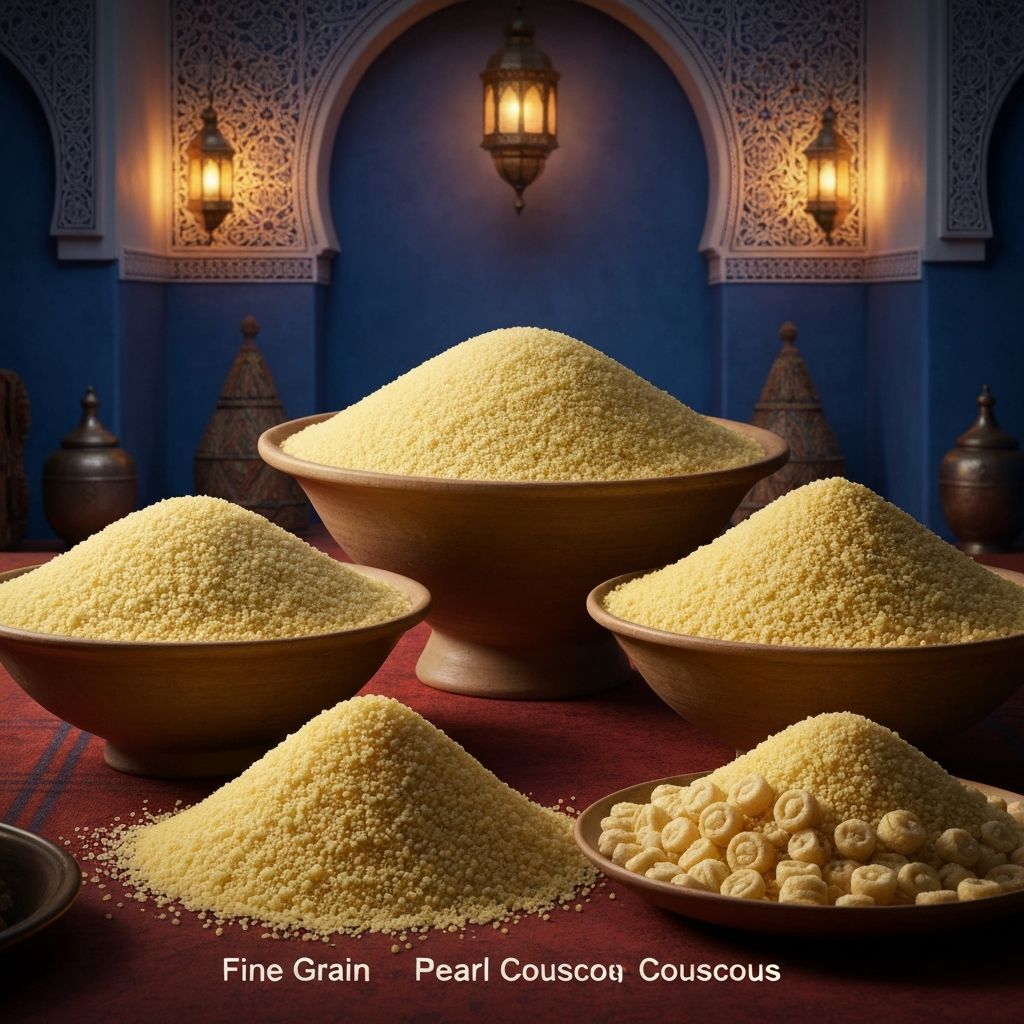
- **Fine-grain:** Delicate, subtle flavor, used for special occasions
- **Medium-grain:** Versatile, most common, ideal for everyday cooking
- **Coarse/Pearl:** Rustic texture, hearty dishes, whole grain options
**Cooking Method:**
Traditional steaming in a two-part pot called a couscoussier:
- Grains are hydrated by steam rising from simmering broth
- Gentle heat preserves grain structure
- Results in light, fluffy texture with individual grains
- Typically requires 20-30 minutes total preparation
**Flavor Profile:**
Subtle, grain-forward taste allowing accompanying dishes to shine. Quality couscous adds background richness without overpowering seasonings. Premium brands develop complex, nutty undertones from sun-drying process.
### Type 2: Israeli Pearl Couscous (Ptitim)
**Origin Story:**
Israeli pearl couscous, also called ptitim or couscous israelienne, is a modern industrial invention. Developed in Israel in the 1950s, it represents a completely different product despite similar naming. It's essentially tiny pasta balls rather than traditional couscous.
**Production Method:**
Industrially manufactured using modern processes:
1. Semolina flour mixed with water
2. Extruded into tiny spheres (like BB pellets)
3. Industrially dried at high temperatures
4. Often pre-cooked for convenience
5. Similar to pasta production, not traditional grain preparation
**Appearance:**
Distinct look unlike traditional couscous:
- Large, uniform spheres
- Shiny, polished appearance
- Obvious manufactured look
- Different texture when held
**Cooking Method:**
Boiled like pasta rather than steamed:
- Added to boiling water
- Cooked 10-15 minutes until tender
- Drained and served (similar to rice pilaf)
- No steaming required
- Texture development similar to al dente pasta
**Flavor Profile:**
Mild, somewhat neutral taste with slightly chewy texture. Pre-cooking during manufacturing affects final flavor. Results are hearty rather than delicate, more similar to pasta dishes than traditional couscous.
### Type 3: Instant Couscous (Pre-Steamed/Processed)
**Origin Story:**
Instant couscous represents industrial convenience adaptation of traditional couscous. Created for busy modern cooks, it sacrifices authenticity for speed. Most mainstream supermarket couscous falls into this category.
**Production Method:**
Industrially processed Moroccan couscous:
1. Traditional couscous is pre-steamed
2. Dried rapidly at high industrial temperatures
3. Pre-cooking damages grain structure
4. Creates mushy texture risk
5. Loses traditional flavor development
**Cooking Method:**
Simplified preparation:
- Pour hot water or broth over couscous
- Cover and let sit 5 minutes
- Fluff with fork
- Ready to serve
- No cooking vessel required beyond bowl
**Flavor Profile:**
Compromised by pre-processing. Instant varieties taste adequate but lack complexity of proper traditional couscous. Texture tends toward soft rather than perfectly fluffy, particularly in less expensive brands.
## Detailed Comparison Table
| Feature | Moroccan Couscous | Israeli Pearl | Instant Couscous |
|---------|-------------------|---------------|------------------|
| **Origin** | North Africa (1000+ years) | Israel (1950s invention) | Industrial adaptation |
| **Production** | Hand-rolled, sun-dried | Manufactured spheres | Pre-steamed traditional |
| **Grain Size** | Fine/medium/coarse varieties | Large uniform beads | Traditional small grains |
| **Appearance** | Hand-rolled look, matte finish | Shiny spheres, obvious manufacturing | Pre-cooked granules |
| **Cooking Method** | Steam in couscoussier | Boil like pasta | Rehydrate in bowl |
| **Cooking Time** | 20-30 minutes | 10-15 minutes | 5-10 minutes |
| **Texture Result** | Light, fluffy, individual grains | Chewy, somewhat firm | Soft, sometimes mushy |
| **Flavor** | Subtle, nutty, complex | Mild, chewy | Compromised, adequate |
| **Versatility** | Excellent with traditional dishes | Works with modern bowls | Limited, somewhat basic |
| **Cultural Authenticity** | Authentic, UNESCO recognized | Modern invention | Convenient adaptation |
| **Price** | $3-6/pound premium brands | $2-4/pound | $1-3/pound |
| **Storage Life** | 12+ months properly stored | 12+ months | 6-12 months |
| **Quality Premium Brands** | Tria, Dalia, Kenz, Dari | Limited quality variation | Generic/major supermarket |
| **Traditional Moroccan Cooking** | Perfect, ideal choice | Inappropriate, wrong product | Suboptimal but functional |
| **Modern Fusion/Bowls** | Excellent | Good for modern preparations | Acceptable |
| **Special Occasions** | Perfect for traditional ceremonies | No cultural significance | Not ideal |
## Key Differences Explained
### Cooking Method Impact
**Why Steaming vs Boiling Matters:**
**Steaming (Moroccan):**
- Gentle hydration preserves grain structure
- Each grain remains distinct
- Water absorption controlled
- Results in signature fluffy texture
- Allows sauce absorption when served over stew
**Boiling (Israeli Pearl):**
- Vigorous boiling can break down grains
- Grains absorb water rapidly
- Results in somewhat uniform, firm texture
- More similar to pasta consistency
- Better for grain salads and cold preparations
### Texture Development
**Moroccan Couscous:**
- Fine varieties cook to delicate, almost creamy consistency
- Medium varieties fluffy with individual grain definition
- Premium sun-dried varieties develop subtle complexity
- Properly steamed couscous never feels gummy
**Israeli Pearl Couscous:**
- Maintains firm, chewy bite
- Larger size prevents clumping
- More substantial mouthfeel
- Doesn't absorb sauce as readily
- Similar to cooked pearl barley
**Instant Couscous:**
- Tends toward soft, sometimes mushy
- Grains may blend together
- Can feel slightly gummy if over-hydrated
- Less control over final texture
- Varies significantly by brand
### Flavor Development
**Traditional Moroccan (Sun-Dried):**
- Sun-drying develops nuanced, nutty flavor
- Subtle sweetness emerges
- Grain character shines through
- Complements sauce rather than competing
- Premium brands noticeably superior
**Israeli Pearl:**
- Mild, relatively neutral flavor
- Pre-cooking eliminates grain character
- Manufacturing process doesn't develop complexity
- Flavor depends more on preparation than product
- All brands similar to each other
**Instant Couscous:**
- Pre-processing eliminates sun-drying benefits
- Somewhat bland, generic grain flavor
- High variance between brands
- Manufacturing speed prevents flavor development
- Relies heavily on accompanying sauce
## Pros and Cons
### Moroccan Couscous
**Pros:**
✓ Authentic culinary tradition
✓ UNESCO recognized heritage
✓ Superior flavor development
✓ Perfect texture when properly prepared
✓ Versatile across recipes
✓ Premium quality available
✓ Supports traditional producers
✓ Stores excellently long-term
✓ Available in multiple grain sizes
**Cons:**
✗ Requires proper steaming technique
✗ More expensive than instant
✗ Requires couscoussier or steamer
✗ Longer cooking time (20-30 minutes)
✗ Less convenient for quick meals
✗ Quality varies between brands
✗ Harder to find authentic brands in mainstream stores
### Israeli Pearl Couscous
**Pros:**
✓ Quick cooking (10-15 minutes)
✓ Boils like pasta (easier for novices)
✓ Holds shape well in grain salads
✓ Less finicky than traditional couscous
✓ Widely available
✓ Moderate pricing
✓ Consistent results
**Cons:**
✗ Not authentic Moroccan couscous
✗ Wrong product for traditional cooking
✗ Doesn't work for traditional tagines
✗ Chewy, less delicate texture
✗ Modern invention, no cultural heritage
✗ Often confused with traditional couscous
✗ Not appropriate for traditional ceremonies
✗ Limited versatility
### Instant Couscous
**Pros:**
✓ Very fast (5-10 minutes total)
✓ Minimal equipment required
✓ Budget-friendly ($1-3/pound)
✓ Widely available in supermarkets
✓ Simple preparation
✓ Forgiving of mistakes
✓ Long shelf life
**Cons:**
✗ Compromised quality
✗ Pre-processing reduces flavor
✗ Texture often suboptimal
✗ Not authentic for traditional cooking
✗ Limited versatility
✗ Poor substitute for quality couscous
✗ Emphasizes convenience over excellence
✗ Doesn't reward proper technique
## When to Use Each Type
### Choose Moroccan Couscous When:
- Making traditional Moroccan dishes (tagines, Friday couscous)
- Preparing for special occasions or ceremonies
- You have time for proper steaming
- You want authentic cultural experience
- You're serving guests who appreciate quality
- You're learning proper Moroccan techniques
- You want superior flavor and texture
- You have access to a couscoussier
**Perfect For:**
- Lamb tagines with apricots
- Seven vegetable couscous
- Chicken chermoula preparations
- Special family celebrations
- Traditional Friday meals
- Wedding and holiday dishes
### Choose Israeli Pearl Couscous When:
- Making modern fusion dishes or grain bowls
- Speed is priority over authenticity
- Creating cold grain salads
- You lack steaming equipment
- You're uncertain about technique
- You prefer boiling simplicity
- You want firmer texture
- You're feeding children unfamiliar with Moroccan food
**Perfect For:**
- Mediterranean salad bowls
- Quick weeknight side dishes
- Cold salads
- Modern fusion cuisine
- Grain bowls with various toppings
- When time is extremely limited
### Choose Instant Couscous When:
- You absolutely must prepare in 5 minutes
- Budget is extremely limited
- You're desperate and it's only option available
- You're experimenting with new recipes
- You don't care about authenticity
- You're serving to indifferent audiences
- You lack proper equipment
**Perfect For:**
- Emergency weeknight meals
- Absolute beginner exploration
- Minimal equipment situations
- When authentic isn't priority
## Where to Buy Authentic Moroccan Couscous
For guaranteed authentic Moroccan couscous, purchase from specialized retailers:
**BuyCouscous.com & Kenzadi.com Advantages:**
- Direct Moroccan sourcing
- Premium brands: Tria, Dalia, Kenz, Dari
- Verified authenticity
- Multiple grain sizes
- Competitive pricing
- Educational content
- Recipe support
- Customer expertise
- Bulk options available
## Final Recommendation
**For Authentic Moroccan Cooking:**
Select authentic Moroccan couscous from premium brands like Dari, Tria, Dalia, or Kenz, available exclusively through buycouscous.com and kenzadi.com. Traditional cooking deserves authentic ingredients. The superior flavor and texture justify the moderate price premium.
**For Modern Fusion or Convenience:**
Israeli pearl couscous works well if you're not pursuing traditional authenticity and prefer boiling simplicity.
**For Emergency Situations Only:**
Instant couscous is acceptable if no alternatives exist, but shouldn't be default choice.
**The Truth:**
Authentic Moroccan couscous produces demonstrably superior results. Once you've experienced proper traditional couscous, you'll understand why thousands of years of culinary evolution created this perfect product. Invest in quality—your palate (and your guests) will thank you.